
 British English
 American English
 Australian English
 Canadian English
 Català
 Česky
 Dansk
 Deutsch
 Español
 Français
 Français de Belgique
 Ελληνικά
 Magyar
 Italiano
 Nederlands
 New Zealand English
 Norsk
 Polski
 Português
 Português Brasileiro
 South African English
 Русский
 Svenska
 Irish English
 简体中文







Lake District temporary campsite ban sparks backlash from farmers
Oct 30 2026 Posted by Pitchup.com
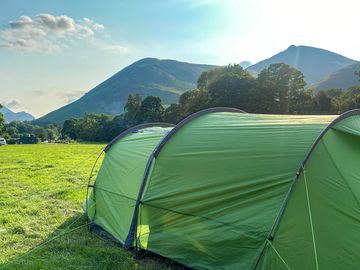
Angry farmers in the Lake District National Park are calling on the park authority to rethink plans to ban temporary campsites.
If allowed to come into force, the new law could cost farmers and landowners hundreds of thousands of pounds in lost tourism revenue, campaigners claim.
Now, in a bid to overturn the ban, one farmer has launched an online petition calling on the park authority to reconsider the move.
Ruby Cardiff, of Newlands Valley Campsite near Keswick, says her campsite helps sustain the agricultural side of her business and if the ban is enacted, her family’s future would be in serious jeopardy.
Ruby said: “We run a small pop-up campsite which has been operating for six years.
“Our campsite forms an important part of our farm diversification, helping us sustain our agricultural business whilst welcoming visitors to enjoy the Lake District countryside.
“Tourism diversification is an important way for farms to supplement agricultural income and remain sustainable. We believe this must be given proper consideration when assessing the consequences of the proposal.
“That’s why I’ve set up the petition, to highlight the damage the move would create and to try to force a rethink.”
Article 4 Direction removes Permitted Development Rights in the Lake District
The row has broken out after the Lake District National Park Authority (LDNPA) voted 15–1 in September this year to approve an Article 4 Direction, removing Permitted Development Rights across the national park.
Permitted Development Rights have existed for 80 years and enable farmers and landowners to run campsites for up to 60 days per year in England without needing extra planning permission.
Removing them means anyone wanting to set up a campsite will now have to apply for full planning permission, which involves significant cost and a long wait as figures show in the year to March 2026, 55% of Lake District minor applications missed the 8-week limit.
It’s a route Ruby has been down before and has little faith will work for other farmers in the national park.
She said: “The LDNPA is proposing to remove Permitted Development Rights on campsites across the whole of the Lake District National Park, meaning we will have to apply for planning permission which they won’t allow. We know this because we applied in 2022 and they refused on the basis of ‘visual impact’ on the landscape.
“If campsites like ours cannot get planning, it will be the end of pop-up campsites.”
As well as launching the petition, Ruby has written a detailed email to the LDNPA outlining her objections.
She is calling on the authority to consider four key actions:
- Fully assess the economic and social consequences for established small campsites and the farms that rely on them for diversification
- Consider proportionate alternatives, including a system of appropriate conditions or safeguards for temporary campsites
- Explain how established operators will be treated once the Direction takes effect, including whether any transitional arrangements or alternative routes to lawful operation will be available
- Publish a clear assessment of the likely impact on farm businesses, affordable visitor accommodation and the wider rural economy.
She said: “Temporary campsites provide additional accommodation during busy summer periods, support local shops, pubs and attractions, and give visitors more choice.
“These campsites are non-electric and nutrient neutral so can be described as sustainable tourism. Also, the bigger issue is fly-camping, and this will only increase when there are no seasonal, reasonably priced campsites available.
“We should be encouraging families to opt for more basic camping in fields, get them off devices and into nature to explore and play in the outdoors.”
Cumbria is the most popular UK county for back-to-basics camping
The move comes despite new figures from Pitchup.com – Europe’s most popular outdoor accommodation booking site – revealing Cumbria is the UK’s most popular county for back-to-basics camping.
The figures show pop-up campsites run under Permitted Development rules in Cumbria generated almost £1.6m in revenue this year, beating Cornwall into second place.
According to Dan Yates, Founder of Pitchup.com, this makes removing Permitted Development Rules across the national park even more ridiculous.
He said: “Temporary campsites run under Permitted Development generate a huge number of benefits.
“First of all, farming is facing a huge number of challenges – especially the type of hill farming that characterises the Lakeland fells – and small campsites are one relatively easy way farmers can bolster their income. Banning them from being able to do this is borderline criminal.
“But the ramifications go much further. We carried out some research a few years ago that showed over 50% of the tourism spend from temporary campsites went into businesses in the local community – pubs, restaurants, shops, and tourism attractions.
“This means LDNPA’s decision is depriving local people of around £850,000, a benefit which, astonishingly, has not been recognised by the authority.
“Another advantage is affordability. Accommodation in the Lake District is expensive – in many cases prohibitively so for families when the cost of living is so high. But pop-up campsites enable people on lower budgets to enjoy all the things about the Lake District wealthier people take for granted. Looking at this move from that angle makes it feel pretty discriminatory.”
Mr Yates is now encouraging all farmers and landowners affected by the issue to sign Ruby Cardiff’s petition and to write to the LDNPA.
“The government already overhauled permitted development rights in 2023 after considering feedback from hundreds of consultees, including 79 local authorities/national parks and 63 councils,” he said.
“That means this Article 4 direction is in direct contradiction to the intention of the government, which was ‘to ensure that holidaymakers can continue to visit and stay in popular destinations around the country and provide a boost to local economies and businesses, in line with our levelling up ambitions’.
“Also, government planning guidance updated in August clearly states that Article 4 directions should ‘be based on robust evidence, and apply to the smallest area required to mitigate the evidenced harm’, which this is clearly not, so it is hard to see any justification for it at all.
“Everyone needs to stand together to fight this ruling.
“Not only will it impact a lot of people negatively, it sets a precedent that says the LDNPA and other national park authorities can act with impunity. They can do what they want regardless of what anyone else thinks and regardless of the consequences. That cannot be right.”
Ruby Cardiff’s petition encouraging the LDNPA to reverse its decision can be found here https://www.change.org/p/stop-article-4-direction-in-the-lake-district